A common mistake in digital health is doing evidence “later”. The better approach is to treat evidence as a staged strategy, where each maturity stage has a clear proof goal.
Here is a practical way to think about it:
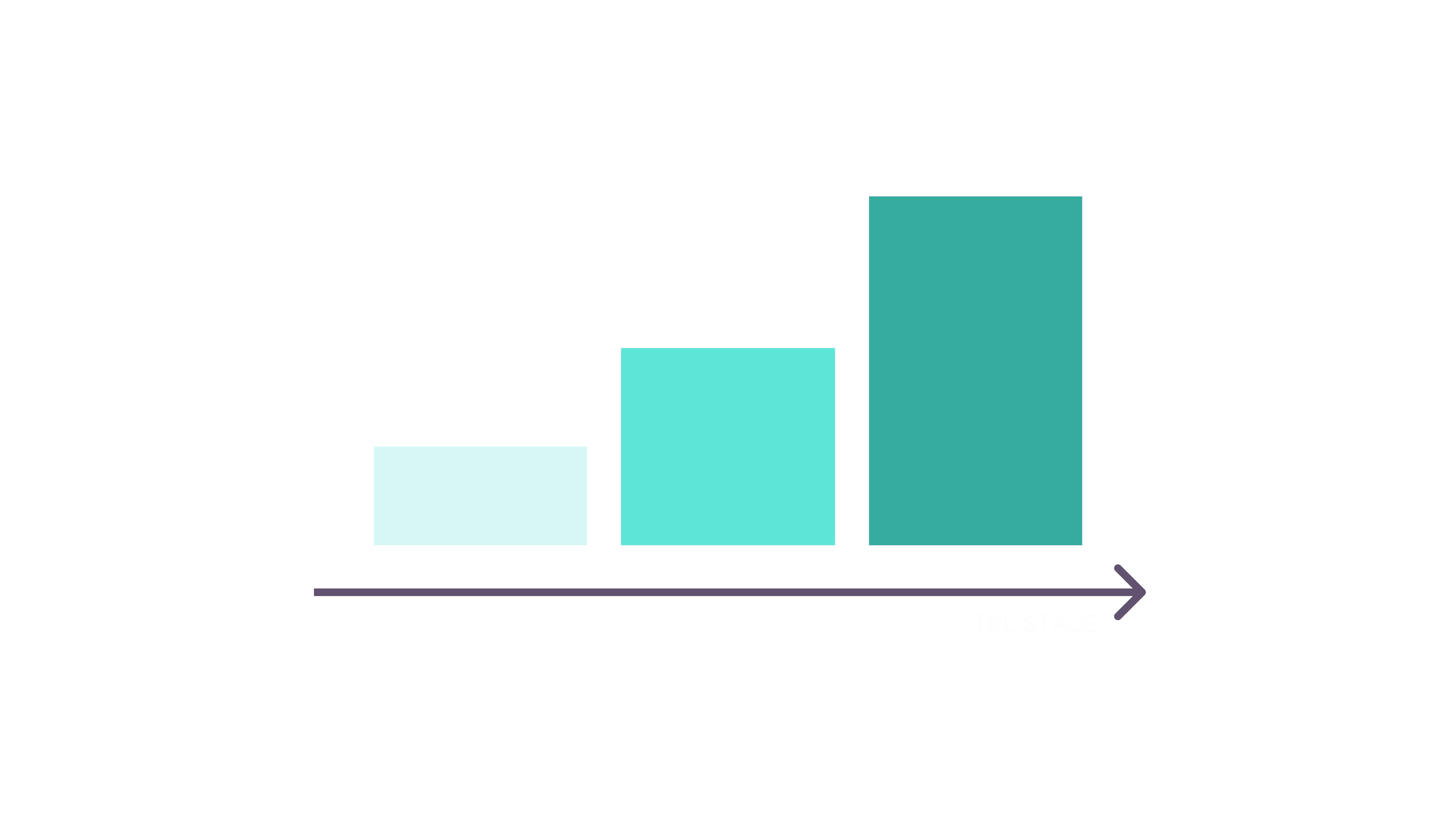
Early Stage (TRL 1–3): Prove relevance and plausibility
Goal: confirm the clinical problem, define the intended benefit, and test whether the core mechanism could work.
Typical proof: stakeholder interviews, workflow mapping, early feasibility tests, and evidence benchmarking from existing research.
Output: a clear claim, measurable outcomes, and a realistic next proof step.
Mid Stage (TRL 4–6): Prove feasibility and value signals in relevant conditions
Goal: show the solution works outside ideal conditions and that it can generate meaningful signals for adoption decisions.
Typical proof: retrospective data analysis to validate feasibility and baseline rates, then pilots designed around value endpoints, not only engagement.
Late Stage (TRL 7–9): Prove operational impact and adoption readiness
Goal: show sustained performance, workflow integration, and real-world impact in the intended setting.
Typical proof: expanded pilots, implementation evaluation, monitoring of performance over time, and real-world evidence.
The reason this staged approach matters is speed. You want the fastest valid method for each question. Sometimes a prospective study is necessary, but often early maturity questions can be answered faster with evidence review and retrospective data.
Worthmed® supports evidence strategy in three practical steps: benchmark what is already known, analyze what your real data can prove, then run pilots that produce decision-grade outcomes.